
Pasture Management for Horses
Whether you run a livery yard or have your horses at home, pasture management is one of the most important, yet often overlooked, aspects of your horse’s care. Well-maintained grazing with active weed control should be part of your horse’s everyday welfare. Providing quality turnout ensures that your horse has access to nutritious forage, helps reduce feed costs, supports their mental wellbeing, and can help prevent common health issues such as laminitis and obesity. Whether you’re a horse owner based in the UK, USA, or Canada, you must take a tailored approach to your pasture management. To maximise the benefits of your pasture management for horses, consider your regional climate, soil analysis, and grazing conditions.
In this exclusive guide, we break down the essentials of pasture management for horses, highlighting key differences between the UK, the US and Canada. By understanding these differences, we can actively help our paddocks to be productive while ensuring we provide safe turnout for our horses throughout the year.
What Is Pasture Management for Horses?
Pasture management, involves the planning, maintaining, and improving of the grazing land where horses forage. Your pasture plan should include:
- Managing demand on your grazing
- Promoting healthy grass growth
- Regular weed control and toxic plants
- Rotating your field plan
- Ensuring your horses have safe fencing and a clean water supply
- Preventing overgrazing and soil erosion
A good pasture management strategy needs to carefully balance the needs of the horse with your land’s ability to regenerate, while providing continuous access to safe and nutritious forage.
Why Is Pasture Management So Important?
Poorly managed pastures can pose numerous hazards to both your horse and your land. These issues include nutritional imbalances, a lack of plant diversity, parasite overload, mud and erosion problems, increased feeding costs, and even horse injuries from field hazards such as rabbit holes or poisonous plants. Horses are natural foragers, so they deserve to enoy well-maintained pasture for both their physical and mental health and wellbeing.
Additionally, the health of your paddocks impacts on biodiversity and the soil’s ability to thrive, making your turnout management a key consideration in any sustainable equine management.

Pasture Management in the UK
Generally speaking, the UK’s temperature and rain fall, creates ideal conditions for grass growth, albeit some of the longer, drier weather patterns we are now experiencing. As most horse owners in the UK are aware, long dry spells followed by very wet weather also present challenges such as waterlogging, mud, and poaching (soil compaction caused by hooves). For those with paddocks on clay soils that drain poorly, this can include having to install drainage systems and careful planning during wetter months.
Key UK Practices
- Rotational Grazing: Frequently moving horses between paddocks allows for the rest and regrowth of grass, helping to maintain grass coverage and reduce parasite build-up.
- Harrowing & Reseeding: UK pastures often benefit from harrowing with a chain harrow to break up manure and thatch, as well as periodic reseeding with hardy, horse-safe grass mixes (e.g., perennial ryegrass, timothy).
- Topping (Mowing): Prevents weeds from going to seed and encourages leafy regrowth.
- Soil Testing & Lime Application: Due to frequent rain, soils can become acidic. Lime applications can help correct the soil pH and improve grass availability. Companies like ForagePlus provide soil analysis for horse owners.
Pasture Management in the USA
Due to its size, the United States embraces a vast range of climates. As a result, your pasture management strategies must vary significantly based on region.
Key USA Practices
- Region-Specific Forages: Breaking down into regions, orchardgrass and Kentucky bluegrass dominate the northern states due to the cooler temperatures and shorter growing seasons, while warm-season grasses (e.g., Bermuda grass, bahiagrass) thrive in the heat of summer in southern areas.
- Dryland Management: In drier states (Arizona, Nevada), pasture may not be feasible year-round. Irrigation, dry lot paddocks, and fenced areas with little to no vegetation can provide a safe alternative in your pasture management plan, and hay-based feeding is a common practice.
- Weed & Toxic Plant Control: The USA has a wide variety of toxic plants, from fast spreading ragwort in the northeast to locoweed in the west. It’s imperative to regularly check your pasture and identify and remove toxic pasture plants to ensure a safe environment for your horse.
- Cross-Fencing & Sacrifice Areas: To prevent overgrazing in winter or drought, many farms use ‘sacrifice paddocks’ to rest the main pastures. A similar concept in pasture ecology is adopted in the UK, with many livery yards implementing a ‘summer field’ and ‘winter field’ approach, where space allows.
Pasture Management in Canada
Canada largely experiences long winters and relatively short growing seasons, which means that pasture productivity is seasonal and feeding hay plays a more significant role in the horse’s diet during colder months.
Key Canadian Practices
- Winter Paddock Management: Canadian horse owners often rely on ‘sacrifice paddocks’ or winter paddocks, which protect primary grazing fields during the snow season.
- Grazing Season Planning: Early spring turnout is typically delayed until fields are sufficiently dry to prevent poaching. Turnout usually runs from May to October, depending on the region.
- Pasture Renovation: After harsh winters, fields may require reseeding, fertilisation, and soil testing to allow them to return the following winter after significant rest and recuperation.
- Fly and Parasite Control: While Canada’s northern climate can delay the fly season, the wet, warm summer months still require a solid routine of manure management, faecal worm egg counts, and rotational grazing to help control internal parasites.
Key Components of a Strong Pasture Management Plan
Regardless of your country or region, successful pasture management for horses includes:
- Soil Testing: Know your soil characteristics and soil type. You should identify your soil pH, soil bacteria, nutrients, and deficiencies to help guide your fertilisation plans. Your grazing management should consider these elements to ensure you contribute to improving your soil health, which in turn will enhance your pasture.
- Rest and Rotation: Avoid overgrazing by giving paddocks rest periods. Forage quality is essential as part of your pasture management plan. If this means sectioning the land into smaller paddocks to allow for a recovery period, thereby improving your grazing management, then do so for long-term benefits.
- Field Shelter: Ensure your horses have some protection from the elements, and position it in an area where the ground is less likely to flood or become compacted due to higher traffic. Ideally, a field shelter on hard standing is the best choice.
- Water Management: Ensure you have a clean and reliable water source in each paddock. Check daily and empty and clean water troughs regularly. Manage wet areas, especially in winter turnout, by fencing these off to help prevent injuries and foot issues.
- Fencing: Use horse-safe fencing (electric or post-and-rail) to prevent injuries and control grazing. Fence off areas around oak trees and sycamore trees where acorns can fall and sycamore seeds can travel into your pasture.
- Toxic Plant Monitoring: Routinely walk pastures to remove poisonous pasture plants and dangerous hazards in your horse’s summer paddocks, like ragwort, buttercups, or bracken. Familiarise yourself with poisonous plants so you can identify and remove them with ease.
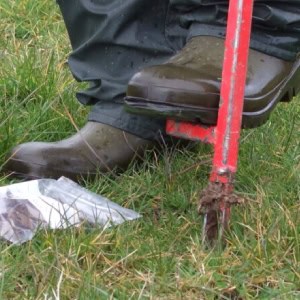
- Regular Manure Removal: Poo picking your fields is a vital part of your field management, helping to break the worm eggs, worm larvae cycle and helping you plan your horse wormer for autumn. Combine your manure removal field visits with weed management to target both in a single trip.
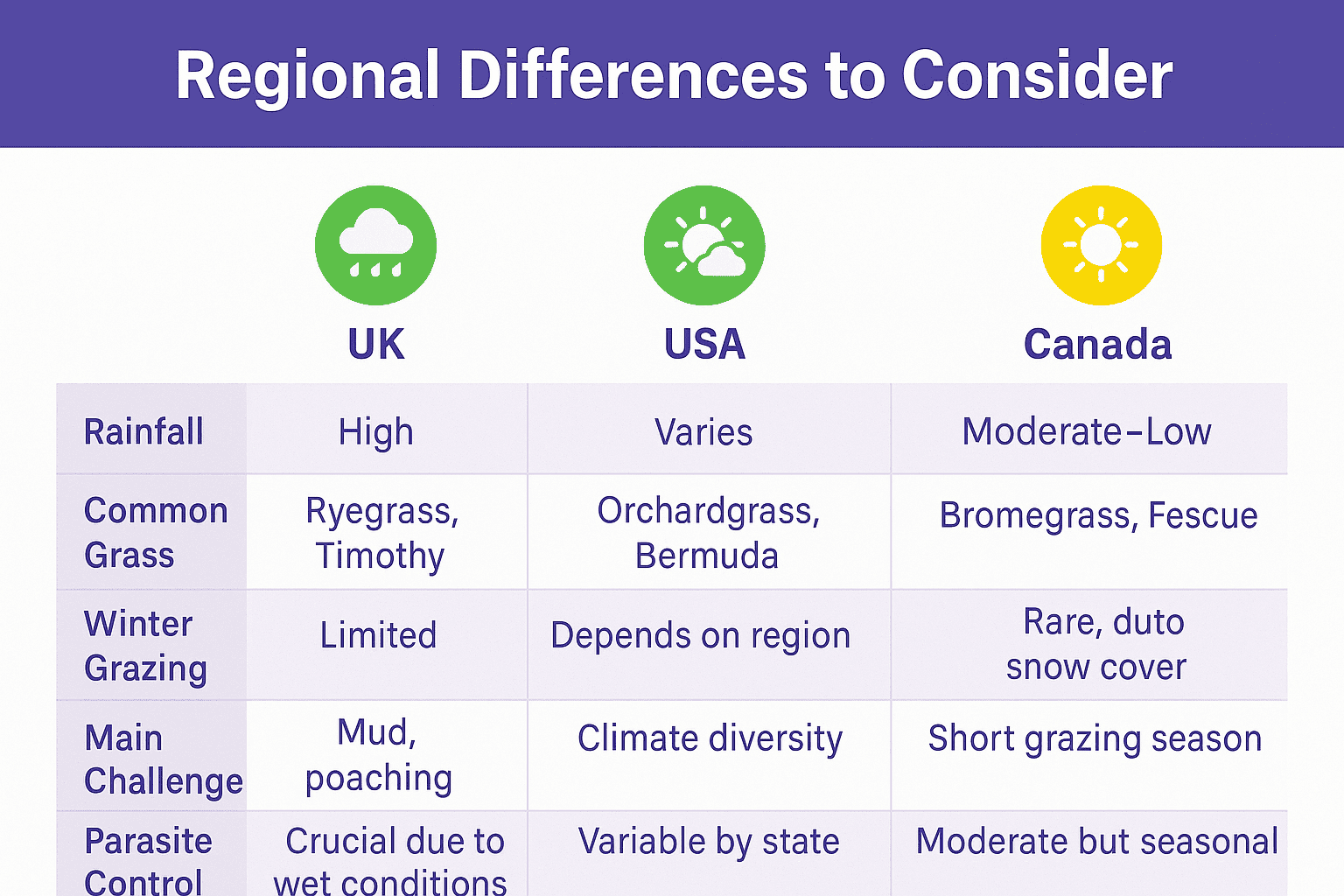
Regional Differences to Consider
With climate changes, this may not be true for every year, but as a general rule of thumb for the UK, USA and Canada, here is a brief overview;
???? Top FAQs About Pasture Management for Horses
Here are some top FAQ on pasture management – with answers from our Founder and equine wellbeing expert, Han van de Braak BSc LicAc MCSP MBAcC (Retd.);
1. What is pasture management for horses?
Han answers: “Pasture management involves maintaining and improving grazing areas to support your horse’s health, prevent overgrazing, reduce weed growth, manage parasites, and preserve your soil quality. Within your pasture management, you should consider rotational grazing, mowing, reseeding, soil testing, and weed control.”
2. Why is pasture management important for horses?
Han answers: “Good pasture management ensures horses have access to safe, nutritious forage, reduces feeding costs, supports healthy gut health, thus reducing the risk of ulcers in horses, helps prevent laminitis and obesity, and protects the environment from erosion and degradation.”
3. How many acres per horse are recommended?
Han answers: “There’s no real ‘one size fits all’ approach here because it depends on real estate costs and the horses (size and requirements), but as a general guideline, as below.”
- UK: 1.5 to 2 acres per horse (with rotation).
- USA: 1 to 3+ acres, depending on region and pasture quality.
- Canada: 2 to 4 acres due to shorter grazing seasons and recovery needs.
4. What grasses are best for horse pastures?
Han answers: “In an ideal world, your horse pastures should include a forage mix of the following grasses to give optimum nutritional support.”
- UK: Perennial ryegrass, timothy, meadow fescue.
- USA: Orchardgrass, Bermuda (South), Kentucky bluegrass, brome.
- Canada: Creeping red fescue, smooth brome, timothy, orchard grass.
5. How often should pastures be rested or rotated?
Han answers: “Ideally, every 2–6 weeks, depending on grass growth, season, and stocking density. Rotational grazing allows your paddocks to recover sufficiently and breaks the parasite lifecycle.”
6. What is a sacrifice paddock, and should I have one?
Han answers: “A sacrifice paddock sounds more dramatic than it is! It is a designated area where horses can be kept when the main pasture is resting or during wet or muddy seasons. And yes, it’s highly recommended, especially in the UK (winter poaching), Canada (spring thaw), and damp regions of the USA.”
7. How do I control weeds and toxic plants in my pasture?
Han answers: “Ensuring your horse’s paddocks are free from toxic plants is essential to their short and long-term health and wellbeing. Here are some methods you could consider:
- Regular mowing (“topping”)
- Hand-pulling or spot spraying
- Keeping pastures dense with healthy grass
- Annual pasture walks to remove toxic plants like ragwort, buttercups, and bracken.
8. Can horses graze in winter?
Han answers: “Depending on your country, region or even livery yard, this varies.”
- UK: Limited grazing due to mud and wet fields; Some horse owners can keep their horses on turnout by supplying hay in the fields and careful ground management.
- USA: It depends on the region – some areas allow year-round grazing, while others require dry lots.
- Canada: Winter grazing is rare; most rely on hay and turnout in snow-covered paddocks.
9. How do I prevent overgrazing in small fields?
Han answers: “With land at a premium here in the UK, horse owners often find themselves trying to manage smaller fields, but there are ways to manage smaller areas.
- Consider installing a track system and using the main paddocks for winter use.
- Use rotational grazing
- Set up a sacrifice area.
- Supplement fields with hay
- Keep horse numbers low (no more than one horse per 1.5 acres in most cases)
10. What fencing is best for horse pastures?
Han answers: “The best fencing is safe and secure fencing, such as post-and-rail, electric tape, or mesh fencing. Avoid barbed wire. In wet regions (like the UK), electric fencing is a popular choice for easy rotation.
11. Do I need to fertilise my horse pasture?
Han answers: “Yes. Annual soil testing will reveal which nutrients are lacking. Fertilising (and liming if necessary) boosts grass quality and growth. Be careful to avoid applying manure or fertiliser right before heavy rainfall and seek expert advice and help if you are unsure what methods to proceed with.”
12. When should I reseed my pasture?
Han answers: “Reseeding your paddocks should be done when temperatures are their optimum, and it’s worth addressing any nutrient deficiencies you may find before reseeding so you improve the summer nutrition your horse needs.”
- UK: Early spring or late summer/early autumn
- USA/Canada: Spring or fall, depending on climate — avoid seeding during droughts or frosts
13. How do I manage parasites in pasture?
Han answers: “A healthy horse is free of parasites. As horse owners, it’s our responsibility to ensure that our horses have access to healthy pastures. Here are my tips:”
- Practice rotational grazing
- Cross-graze with sheep or cattle if possible.
- Pick up manure regularly (especially in small paddocks)
- Follow strategic deworming protocols.
14. Can horses and other animals share pastures?
Han answers: “Yes, rotational grazing with cattle or sheep can help improve pasture health and help break parasite cycles. However, fencing and nutritional needs must be managed carefully. Always seek expert advice if you are considering adding different species to your land.”
15. What toxic plants should I watch for in my region?
Han answers: “There are quite a few, and some more prevalent in particular regions, so it is worth doing your research for your area and country.”
- UK: Ragwort, buttercups, foxglove, yew, hemlock, acorns and sycamore seeds
- USA: Oleander, yew, ragwort, hemlock, Locoweed, red maple, Johnsongrass, bracken fern
- Canada: Hemlock, nightshade, St John’s wort, hoary alyssum, milkweed, buttercup
Han’s final thoughts;
“Remember, pasture management is not a one-size-fits-all approach. Your pasture is deeply influenced by geography, weather, and land management techniques. Be agile in your strategy to help prevent summer health problems in horses and develop productive grazing practices. Investing time in rotational grazing, pasture management not only improves your horse’s health and reduces feed bills but also protects your land’s long-term value and ecological balance.”

Enjoyed This Blog, You Might Want To Enjoy 7 Benefits of Aloeride aloe vera for horses.