
What Is Enrichment for Horses

We know that caring for our horses goes far beyond feeding, grooming, and exercise. True horsemanship involves understanding what makes a horse thrive, both mentally and physically, as well as emotionally. This is where the topic of enrichment comes into the conversation. In this blog, natural horse care advocate and Founder of Aloeride, Han van de Braak, explains the importance of enrichment for horses.
Enhancing Well-being Through Mindful Management
Equine enrichment is not just a trend or luxury; it’s an essential part of responsible horse care. It promotes curiosity, reduces stress, and mirrors the natural behaviours horses evolved to express in the wild. In this blog, we explore enrichment for horses and how you can integrate it into your own equine’s day-to-day quality of life.
What Does Horse Enrichment Mean?
In simple terms, enrichment for horses means providing opportunities for them to think, explore, and interact with their environment in rewarding ways. Horses are highly intelligent herd animals. In their natural environment, wild horses graze, roam, socialise, and respond to a constantly changing world. However, for our domesticated horses, that variety often disappears and is replaced by routines which, while practical, can often leave horses mentally under-stimulated or even anxious. Enrichment is about recreating that variety: engaging the horse’s senses, encouraging movement, and providing mental challenges that keep them content and focused.
Why Is Enrichment Important for Horses?
There are many reasons why enrichment is so important to your horse’s welfare. It can significantly enhance a horse’s overall well-being. When horses lack stimulation, they can become frustrated, stressed and bored. This can lead to the development of undesirable equine behaviours, such as weaving, cribbing, or box-walking, as a way to cope with boredom, frustration, and colic concerns.
By introducing enriching activities, horse owners can help their equine friends become:
- Calmer and more settled in their stable or paddock
- Mentally engaged, reducing stress and anxiety
- Physically active, supporting fitness and digestive health
- Confident in training and social interactions
Think of enrichment as’ wellness for the equine mind’, taking a holistic approach to happiness and health.

Types of Enrichment for Horses
There’s no one-size-fits-all formula. The best enrichment plans reflect a horse’s personality, age, workload, and ultimately their environment. With many horses at livery yards in the UK, it is not always possible to tick every box, but even if you can introduce one or two elements into your horse’s daily life, it will benefit them.
1. Foraging and Feeding Enrichment
Encouraging natural grazing behaviours in the stable and field can mimic their natural desire to seek out food. Whether your horse is on box rest or has to be stabled for longer periods of time due to yard routines, improve their quality of life and help prevent the symptoms of ulcers in horses from developing by incorporating a few of these:
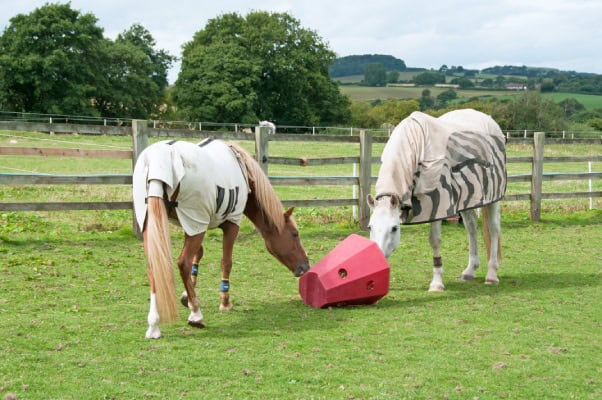
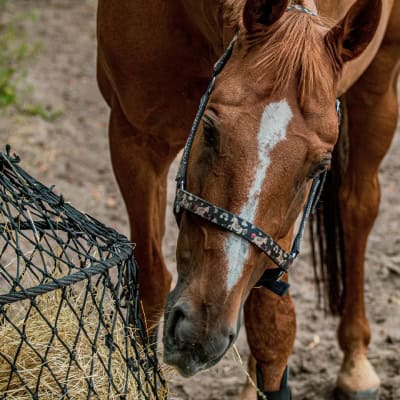
- Use slow-feed hay nets or forage balls to extend the time your horse spends eating.
- Hide treats in snuffle mats or puzzle feeders for mental stimulation.
- Offer varied forage like meadow hay or haylage, and herbs to awaken the senses.
- Offer a selection of water buckets with different herbs to tempt their taste buds (Always have fresh plain water available).
2. Social Enrichment
Horses are herd animals that thrive on companionship and social interaction. Often at livery yards, it’s impossible to keep the herd static with owners coming and leaving. However, if you can find a field situation that offers stability and friendship for your horse, it will benefit your equine friend. You can give your horse social enrichment by:
- Providing turnout with compatible horses or ponies.
- Allow horses to enjoy mutual grooming and positive social contact.
- If full turnout with a herd isn’t possible, visual and tactile contact through safe partitions can make a big difference. Even grooming over a fenceline can bring a wealth of benefits.
3. Environmental Enrichment
Creating an environment for your horse that’s interesting and safe to explore is the ultimate goal for many horse owners. With more and more horse owners looking to create a track system for horses, there are lots of ideas you can implement, both in a traditional field set-up and on a track system. These might include:
- Adding different textures underfoot (sand, grass, rubber).
- Including logs, cones, or poles to create different walking patterns in turnout areas.
- Varying their daily routine to introduce novelty without stress.
4. Sensory Enrichment
Engage with your horse’s natural curiosity. Horses have acute senses, so if your horse is stabled, here are some simple ideas to bring pleasure and harmony by giving your horse some sensory enrichment in the stable:
- Use mirrors, toys, or interactive objects that respond to touch.
- Play gentle music or natural sounds in the stable. Our horses love music!
- Introduce pleasant scents such as lavender or peppermint (always ensuring safety and in moderation).
5. Training and Cognitive Enrichment
Mental stimulation is just as important as physical exercise for your horse, so get out of the saddle and work with your horse on the ground to build a strong and rewarding partnership based on trust and mutual respect.
- Incorporate groundwork, clicker training, or obstacle courses.
- Teach simple tasks that reward problem-solving and trust.
- Keep your focus on short, positive sessions to keep interest.
How to Introduce Enrichment Safely
Start small and observe how your horse responds. Not every horse enjoys the same activities, and too much change too quickly can be overwhelming.
- Introduce one new element at a time.
- Keep sessions short and positive.
- Watch for signs of stress or disinterest. Remember, enrichment should always add value, not pressure.
- Review and rotate activities regularly to maintain novelty.
The Role of Enrichment in Future Horse Management
While the concept of enrichment might represent the next level of equine well-being, it’s really just a level of deeper care to look after the horse’s mind as much as their body. Forward-thinking livery yard managers and horse owners are now creating environments which balance practicality with psychology. Incorporating features such as track systems, barns that offer horses a choice between shelter and the field, open-view stables with connected mini turnout areas, interactive feeding systems, and natural paddock designs and pasture management for horses are growing in popularity, looking to encourage movement and connection with an ethos which is grounded in science, empathy, and the future of horse care and management.